Sunday, August 11, 2013

Malcolm X


Malcolm Little, who later changed his name into Malcolm X , was born on February 19, 1925 in Omaha, Nebraska. His father Earl Little, a supporter of the Black Nationalist Leader Marcus Gavey, was killed in 1929 by the Ku Klux Klan and after his mother was sent to a mental institution. The collapse of the family was followed by his personal breakdown that was intensified by a teacher who told him that becoming a lawyer "is no realistic goal for a nigger". 

Later, Malcolm travelled to New York, started to commit crimes and was arrested for robbery in 1946. During this time in prison he converted to the Islam and joined the action of Islam. After his dismissal he became a minister and a national spokesman for the Black Muslims and began to fight violently for Civil Rights ( "There is nothing in our book, the Koran, that teaches us to suffer peacefully" ). 

But after Malcolm found out that their leader Elijah Muhammad did not follow the rules of the Koran, he lost his trust in the Nation of Islam ( "Before it was for and by the guidance Elijah Muhammad. Now I think with my own mind, sir!" ). Because he commented on the assassination of John F. Kennedy with the phrase "he never foresaw that the chickens would come home to roost so soon", which means that JFK's policy partly caused his death, he was silenced for 90 days and left the Nation of Islam. 


After his pilgrimage to Mekka in 1964 he changed his name into El-Hajj Malik El-Shabazz and moreover he changed his point of view ( "I am not a racist. I am against every form of racism and segregation, every form of discrimination. I believe in human beings, and that all human beings should be respected as such, regardless of their color." ). 


Therefore the relations between him and the Nation of Islam became volatile. After repeated attempts on his life and even a firebombing of the house where he lived with his wife Betty X, he married in 1958, and their four daughters in 1965, he realized that he would probably die. Two days before his assassination he said: "It is a time for martyrs now, and if I am to be one, it will be for the cause of brotherhood. That is the only thing that can save this country ".


 In the Manhattan`s Audubon Ballroom, where he was delivering a speech on February 21, 1965, he was executed by three members of the Nation of Islam who rushed on stage and shot him 15 times at close range.


Tuesday, April 30, 2013

Breaking Stereotypes through music: Ray Charles case


The stereotypes are something very common in this world nowadays; you can find stereotypes at the school, job, university, in cultural aspects, etc. But stereotypes are something that comes from many years ago into our society.

One of the stereotypes cases that I would like to show in this post, it’s the case of racial segregation, present along the humanity history. In the 60’s, the case of the segregation was something very important in the United States; the fight between white people and black people was something of everyday.


In this situation I would like to mention to Ray Charles as an example. Ray Charles was a famous musician that was born in the state of Georgia, in the United States. He played Jazz music mixed with a lot of different music styles and since he started his music career, in a very short time he started to be known in the whole country. But the important fact that I want to talk about here, is that Ray Charles was against the racial segregation of those years.
In 1961, Ray had a show in Georgia and outside the building there were black people with signs boycotting segregation. The white people were sitting inside the building waiting for the show to begin, while black people had to watch from the streets. One man stopped Ray and told him to make a difference and not perform for the crowd. Ray agreed with the man and didn’t play. The owner of the venue sued Ray Charles for not playing and because of this He was banned from the state of Georgia. Here is an example of what happened in that year…


Ray Charles was an example in what breaking stereotypes means,
He didn’t care what was going to happen with him after that choice, he just did it.

To break stereotypes is something possible, even when people in the past thought that was something impossible, nowadays we can notice that the stereotypes are decreasing, but it is still a fight that we just can stop with our actions, making this world a better place to live.

So now, what do you think about this, classmates? How can we destroy stereotypes?


Absolute monarchy.

The absolute monarchy is a type of government in which sovereignty the monarch has no or a few legal restraints in state and political matters. During the eighteenth century, the most of the European states were an  absolute monarchy, for instance France and Spain.

The absolute monarchy was the result of the increase of kings' power during the XV, XVI and XVII centuries.
On this type of regimen, the monarch with its court controlled all aspects of the government, including the law-making aspects and to put justice into practice.
The theory of divine rights of the king was created to justify the power of the monarch and to keep the inner order. This theory pointed that kings were given power by God so the unlimited king's power couldn´t be questioned. Also, the king gave God the reasons of his behavior.

The best example of the absolute monarchy was France during the eighteenth century, the absolutism reached its maximum magnificence with the house of Bourbon and they finished abruptly The French revolution.
Meanwhile, England was a different case from the rest of European states. During the sixteenth century, Henry VII and Elizabeth I were the absolute monarch  before others nations. In the eighteenth century, the British monarchs lost their power and England became a parliamentary monarchy. 


Louis XIV of France, who consolidated the absolute monarchy in France.


The Britain supremacy of the seas.

Have you ever ask your self  why a small country like England has so much power?


In May 1588 a massive invasion fleet or Armada sailed from the port of Lisbon,Spain. It was made up of 130 ships fitted with 2,500 guns.     They carried 30,000 soldiers and sailors.    This great war fleet was bound for England.

Why is the 1588 battle with Armada so famous?


The Armada is famous because at that time England was a small nation with a little navy and they were facing the greatest power in the world (Spain) They defeated Spain, with help from Mother Nature. It marked the beginning of England 's mastery of the seas.

The great history of the English navy began, as did serious English exploration and colonization.

Why was the Spanish Armada launched against England?

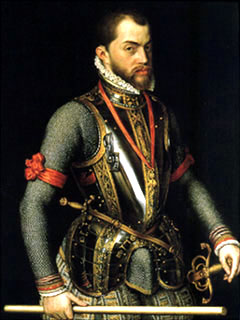
The Spanish monarch, Philip II, was angry that queen Elizabeth had not punished Sir Francis Drake and others English seadogs for plundering Spanish ships.
Philip was a devout Catholic.  He felt it was his duty to invade and conquer England in order to convert the country back to the church of Rome.


                                                              V/S


In conclusion this battle decided the faith of Europe and the rest of the world and marks the point in the history of the world when England became a global power that's why its so important.    I want to add that I finally found why England is at the center in the maps, that is because the importance they won in the world.


The Bloody Queen of England


We usually confuse “Queen Mary I” with “Mary Queen of Scots” because they have lived at the same time but  they are completely different; Mary Stuart (Queens of Scots) was Mary Tudor’s cousin and she ruled Scotland.

Mary Tudor also known as “Bloody Mary” was a daughter of King Henry VIII and his first of six waves Catherine of Aragon.  She was the only child from that union to survive infancy; she reigned as Queen of England from 1553 until 1558 and is considered one of the ten most evil women in history.

In 1553 when Edward, her half-brother died, Mary's cousin Lady Jane Grey was nominated to the throne and was one undisputed winner for her sympathy towards people. By July 19 Jane Grey had been deposed and Mary was the undisputed Queen. Her official coronation came on November 30 of the same year. Mary first began to earn her unofficial title of “Bloody Mary” when she had her cousin, Lady Jane Grey, executed to prevent any possible power struggle.

Mary had always rejected and resented the break with Rome that her father had instituted and his subsequent establishment of the Anglican Church that had flowed from her half-brother's Protestantism, and now she tried to turn England back to Roman Catholicism. This effort was carried out by force, and hundreds of Protestant leaders were executed.
She was determined that the country will return to Roman Catholic so she became in a religious fanatic and burned over 300 prominent Protestants . The official excuse given by the Roman Catholics for this was that they were burning dangerous heretics and were doing them a favour by destroying their bodies in the hope of saving their souls.


When she died in 1558, many Londoners held street parties. Instead of re-establishing Roman Catholicism as who got his fanaticism was promoting the Protestant cause. Her legacy is summed up in the name by which she is known: Bloody Mary.
She was succeeded by her half-sister Elizabeth I, who quickly undid many of Mary's changes, and returned England to its former Protestant-friendly environment.


Why is Mary Tudor important to history?
Mary Tudor is important to world history, as any monarch is, because it allows us to have a snapshot of that country during those years. However, specifically to Mary Tudor, she was important to world history because of her strong Roman Catholic links to other countries.


How can we understand culture's conflicts?


The National Center for Cultural Competence defines culture as an ‘integrated pattern of human behavior that includes thoughts, communications, languages, practices, beliefs, values, customs, courtesies, rituals, manners of interacting and roles, relationships and expected behaviors of a racial, ethnic, religious or social group; and the ability to transmit the above to succeeding generations. This definition covers, in some way, the culture's essence; we can see that whole earth's population is formed by different ethnic group and that reflects a great cultural diversity where each group share characteristics, behaviors and common purposes.
If we research more about this culture diversity, we can found a new concept , the 'Interculturalism'; this new concept suggest live in peace and harmony, proposing positives approaches of empathy and solidarity between these groups. Is very important how we can tolerate this diversity, I realized that our own culture limits us because our ethic, moral and awareness are so different, so there are some cases that we can't tolerate or just we don't understand this cultural, and I talk about two, but there are more than two: 

1.-  Women burned with acid:


This documentary shows what happens in Pakistan,  this country is so different from what  we know about as a society, but with a heartless reality, and shows the different morality between our culture and this vision of culture but, How can we tolerate this culture diversity?, ¿How can we understand this culture? We can see the reaction of politics people, they are so indifferent with this situation, is just other case in this society, people act as nothing happened; we must add that this society is male chauvinist. I think that is almost impossible have tolerance with this case.

2.- 'Dalits' or 'Untouchables':        
                                                            

The  Dalits are a social group inside of India, Dalit status has often been historically associated with occupations regarded as ritually impure, such as any involving leatherwork, butchering, or removal of rubbish, animal carcasses, and waste. With a religious edict, this social groups is discriminated and abandoned by the Hindu's society. While discrimination based on caste has been prohibited and untouchability abolished under the Constitution of India, discrimination and prejudice against Dalits in South Asia remains. This group is a victim of violence, including mob killings and rapes; just for a religious edict, the life of this persons are vulnerable, we can't do anything with this case, just tolerate something unacceptable.

I think that is very difficult understand this diversity, maybe we can share some beliefs or behavior but is something in our mind that doesn't leave us quiet with this kind of culture. In this moment, different organization are trying  to eradicate this conflict but we know that is very difficult change this great culture.


India: Religion and Social Structure

The  religion shapes the social structure, Hinduism divides the population into four "Varnas" actually five but is not included within the other, despite the plurality and cultural diversity of the different colonies legacy that invaded India (united kingdom, french, italy) this system has been maintained for centuries 
The varnas are: 
Brahmins: vedic priests.
Kshatriya: kings, governors and soldiers. 
Vaishyas: cattle herders, agriculturists and merchants. 
Shudras: labourers, artisans and service provider

 and finally the untochables or Dalits

They are the lowest class, despised and nobody can touch them because they are the scum of the earth according to Hinduism they were wrong in the way or "dharma" and reincarnated as punishment worse

this is the point despite our advances in technology, politics, economics, etc.
human rights continue to be violated understand that is part of their religion but reach the limit value more the life of an animal to a human? In india many animals are sacred examples rats, cows, monkeys They can not kill but if it dies a Dalits
 no matter was his destiny.
we still lack in Human Rights...